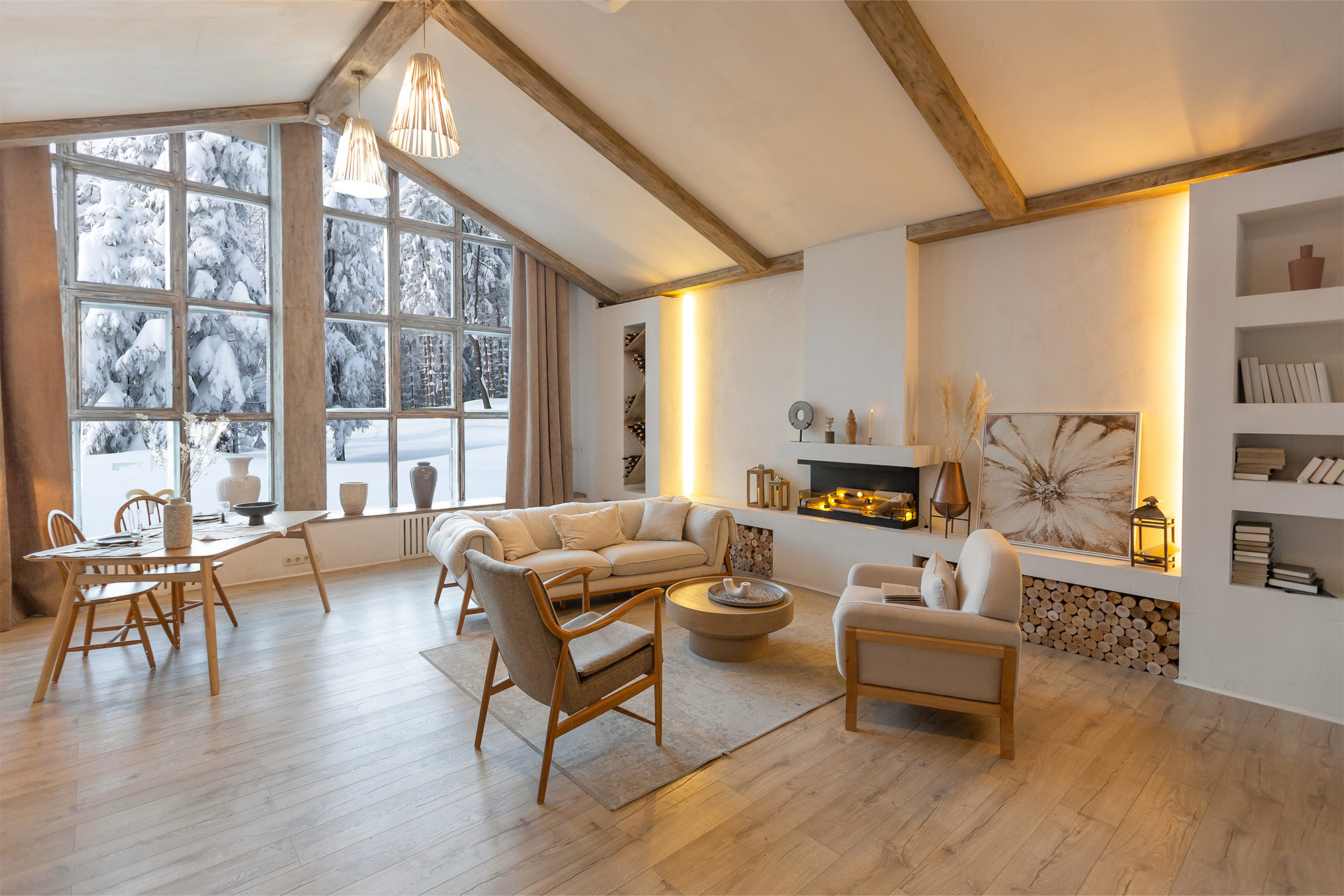
For many retirees in Bloomington Hills, the decision to stay in the home they love isn't just about sentiment — it's about comfort, familiarity, and independence. But as mobility needs shift over time, the very surfaces underfoot can become either a daily hazard or a silent partner in safety. Uneven carpet transitions, slick tile, and floors that gap and buckle with the seasons all introduce subtle risks that accumulate with each passing year. The right flooring choice, made thoughtfully and installed with precision, transforms a home into a place where aging in place feels less like a compromise and more like a natural, dignified continuation of life.
Why Hardwood Makes Sense for Aging in Place
Hardwood flooring offers several underappreciated advantages for older adults. The surface is uniform and predictable — no plush carpet fibers to catch a shuffling foot, no grout lines to trip a cane tip. Walkers and wheelchairs glide across a smooth plank floor with far less resistance than they would on thick carpet, reducing shoulder strain and fatigue during daily routines. And unlike area rugs layered over existing floors — statistically one of the leading causes of falls at home — a properly installed hardwood surface eliminates the need for those temporary trip hazards altogether.
That said, not all hardwood is created equal. For those browsing engineered collections suited to arid environments, the distinction between solid and engineered construction matters enormously. Engineered planks feature a cross-ply core that actively resists the seasonal expansion and contraction that plagues solid wood — a factor that becomes especially critical in Southern Utah's single-digit humidity.
Engineered Stability in the Desert Climate
The Mojave Desert climate presents a unique challenge for natural wood. When ambient humidity drops into the teens — or lower — solid hardwood loses moisture from its cellular structure, shrinking across the grain. The result is unsightly gapping between planks, which isn't just an aesthetic issue. Those gaps become catch points for walker wheels and cane tips, creating exactly the kind of tripping hazard an aging-in-place design is meant to prevent.
Engineered hardwood solves this at the structural level. Its multi-layer, cross-oriented core mechanically counteracts the forces that cause solid boards to shrink, keeping planks tight and seams flush year-round. For Bloomington Hills homeowners who keep their windows wide to showcase those panoramic red rock views, there is another factor to consider: direct sunlight accelerates photochemical fading in any natural wood surface. Pairing new floors with cellular blinds and wooden shutters that diffuse intense UV exposure protects both the color integrity and the long-term stability of the investment.
Professional Installation: The Safety Factor You Can't Skip
Even the highest-quality engineered plank becomes a liability if it isn't installed to exacting standards. Uneven subfloors create subtle lippage between boards — a fraction of a millimeter no guest would notice, but enough to catch the edge of a mobility device. Moisture barriers, expansion gaps at the perimeter, and seamless transitions between rooms all require technical precision that goes well beyond a weekend DIY project.
This is where three decades of regional experience makes a measurable difference. A team that understands how desert subfloors behave — how they settle, how they breathe, how they respond to slab-on-grade construction common throughout the St. George area — delivers an installation that stays flat, tight, and safe for years. Those interested in what goes into a comprehensive flooring installation will find that subfloor preparation and climate-specific techniques are just as important as the product itself.
Coordinating Your Whole-Home Safety Strategy
Flooring doesn't exist in isolation. The safest aging-in-place design considers how lighting, surface texture, and color contrast work together across every room. A matte or wire-brushed finish, for example, reduces glare from the intense desert sun streaming through large windows — glare that can momentarily disorient someone with reduced visual acuity. Slightly textured surfaces also offer better grip underfoot than high-gloss alternatives, without the maintenance demands of carpet.
Coordinating these details across flooring, window treatments, and solid surfaces benefits immensely from a unified approach. Working with experienced design consultants who understand how materials interact under local climate conditions ensures that every choice — from plank width to shutter opacity — reinforces the others rather than working against them.
Aging in place isn't about preparing for decline. It's about designing a home that supports independence so gracefully that the transition feels invisible. The right engineered hardwood, installed by professionals who understand the desert's demands and protected by properly chosen window coverings, creates a foundation that is as safe as it is beautiful. To discuss how these elements can come together in your own home, schedule a complimentary in-home estimate and start with a conversation tailored to your space.