About Laminate Flooring: The St. George, Utah Buyer's Guide
Laminate flooring gives you the look of real wood with a harder, more scratch-resistant surface and a core that stays steady in bone-dry desert air. That combination suits St. George homes remarkably well. Today's wood-look laminate captures the grain, texture and color variation of oak, hickory and pecan so convincingly that it's hard to tell from hardwood at a glance, and the best of it shrugs off pet claws, red dust and the grit that blows in every time the patio door opens.
Sunset Flooring has helped Southern Utah families choose and install floors since 1991, and laminate is one of the floors we lean on most in this climate. You can browse our laminate flooring collection online, preview many styles in your own space with the See in my room tool, and request a free estimate when you're ready to talk about your project.
What Laminate Flooring Is and How It's Built
Laminate is a layered, click-together plank engineered to recreate the look of wood or stone with tougher surface protection. Four layers do the work:
- Wear layer: a clear top coat reinforced with aluminum oxide that resists scratches, scuffs, stains and fading. Its strength is expressed as the AC rating, explained below.
- Design layer: a high-resolution image of wood or stone. Better floors pair it with embossed-in-register texture, where the grain you feel lines up with the grain you see.
- Core: high-density fiberboard (HDF), made from wood fibers pressed under heat and pressure into a dense, rigid board. The core gives laminate its dent resistance and its solid feel underfoot.
- Backing layer: a balancing sheet that keeps planks flat and helps block moisture from below. Some planks add a pre-attached underlayment for comfort and sound control.
Most laminate installs as a floating floor: the planks lock together at their edges and rest on an underlayment instead of being nailed or glued down. That makes installation faster, and a floating floor can often go right over existing hard flooring such as tile or sheet vinyl, as long as it's flat and sound.
Request an estimate
Why Laminate Suits Southern Utah's Desert Climate
Dense, stable and hard-surfaced, laminate handles the conditions that wear floors down here: extreme heat, very low humidity, intense sun and fine red dust. Solid hardwood shrinks and gaps when the air gets this dry, while laminate's HDF core moves far less, so seams stay tighter through months of air conditioning in summer and forced-air heat in winter.
Dust is the quieter threat. The fine silica sand tracked in from yards, trails and golf courses acts like sandpaper under shoes and paws. A strong wear layer paired with a low-gloss, textured surface resists those micro-scratches and hides dust between cleanings far better than a glossy finish.
Sun is the one stressor laminate can't handle on its own. Strong UV through big windows and sliding doors will fade any floor over time, so the best protection pairs a fade-resistant laminate with the right window treatments. Because we also carry shutters, honeycomb shades and blinds, you can plan your floors and your sun control together.
Conditions shift across the region, too. Homes in St. George, Washington, Santa Clara and Ivins take the most heat and sun, while Cedar City and Enterprise add colder winters and more snowmelt carried in at the door, which puts a premium on moisture resistance in entryways.
Laminate AC Ratings: AC3 vs. AC4 vs. AC5
For most St. George households, AC4 laminate is the right choice. It's rated for heavy residential and general commercial traffic, so it covers busy kitchens, hallways, pets and the constant grit of desert living, and you won't pay extra for heavy-commercial durability you don't need.
AC stands for abrasion class (you'll also see it called abrasion criteria). The rating comes from standardized tests that measure how well a laminate's wear layer holds up to abrasion, impact, stains and burns, plus how much the plank edges swell when exposed to moisture. The scale runs from AC1 to AC5:
- AC3: suited to every room in a typical home, and at its best where traffic is moderate, such as bedrooms, dining rooms and formal living rooms.
- AC4: built for heavy household traffic and general commercial use. This is the everyday sweet spot for open kitchens, great rooms, hallways and homes with dogs.
- AC5: made for heavy commercial traffic like retail floors and office lobbies. It works at home, but it's more floor than most families need.
AC1 and AC2 laminates are meant for light-duty rooms and rarely make sense in a family home. To compare only the tougher options, you can narrow our catalog to AC4-rated laminate. For a closer look at how the abrasion test works and why the wear layer matters so much in dusty homes, read our technical guide to AC ratings and wear layers. Flooring an office, clinic or shop? We take on commercial jobs as well as residential ones, and we'll point you toward AC4 or AC5 for those spaces.
How to Read the Rest of a Laminate Spec Sheet
The AC rating tells you about durability, but a few other specs decide how the floor looks, sounds and performs in your home:
- Thickness: laminate commonly runs from about 7mm to 12mm. Thicker planks feel more solid, sound less hollow and ride over small subfloor imperfections better, but thickness doesn't make the surface more scratch resistant. That's the AC rating's job.
- Texture and gloss: embossed-in-register and textured surfaces look more like real wood and disguise fine scratches. A low-gloss finish shows far fewer footprints and dust than a shiny one.
- Edge profile: a micro bevel or painted bevel gives each plank a defined edge, like individual wood boards, while tighter, squarer edges create a smoother, more contemporary floor.
- Underlayment: a pre-attached pad saves a step and softens footsteps. If a plank doesn't have one, pair it with a separate underlayment suited to your subfloor.
- Water rating: look for waterproof or water resistant on the label. The difference between the two matters, and it's covered next.
Waterproof vs. Water-Resistant Laminate
Waterproof laminate is designed to let spills and splashes sit on the surface for hours without swelling the planks, while water-resistant laminate protects against everyday spills as long as you wipe them up reasonably quickly. Waterproof lines get there with tightly sealed joints, water-repellent surface treatments and moisture-resistant cores.
Neither type is meant to survive standing water underneath the floor from a plumbing leak or flood, and warranty terms vary by manufacturer, so check the details on the specific product you choose. For kitchens, laundry rooms and entryways, start with our waterproof laminate styles. For full bathrooms with a tub or shower, luxury vinyl or tile is usually the safer call.
Laminate vs. Luxury Vinyl vs. Hardwood
Most shoppers weigh laminate against luxury vinyl plank (LVP) and hardwood, and each one earns its place in different rooms.
Laminate vs. Luxury Vinyl (LVP)
Choose laminate when scratch resistance, a solid wood-like feel and realistic texture matter most; choose luxury vinyl when water is the bigger risk. Laminate's hard wear surface stands up better to pet claws, dragged chairs and abrasive dust, and its HDF core holds steady in hot, dry homes. LVP's vinyl-based construction makes it fully waterproof, which is why it wins in bathrooms, laundry rooms and anywhere leaks are likely. Our comparison of laminate vs. luxury vinyl for hot, dry homes walks through the trade-offs room by room.
Laminate vs. Hardwood
Hardwood is real wood that can be sanded and refinished several times over its life. Laminate can't be refinished, so a badly damaged plank gets replaced instead. In exchange, laminate resists scratches and dents better, usually costs less to buy and install, and avoids the shrinking and gapping that dry desert air causes in solid hardwood. If you want real wood somewhere, many open floor plans combine the two, with engineered hardwood in the living area and laminate where traffic, pets and spills concentrate. Our design consultation service can help you blend them so the whole space still reads as one floor.
Laminate Brands at Sunset Flooring
Mohawk is a natural fit for our store: co-owner Bruce Barber trained at Mohawk University in every aspect of flooring, laminate included. You can browse our Mohawk laminate for oak, hickory and pecan looks across a range of collections.
Mannington's Restoration Collection is known for its realistic wood visuals and textures, and several styles in our Mannington laminate selection carry a waterproof rating. You'll also find laminate from Inhaus, TAS Flooring, Johnson Hardwood, Eternity Floors, Bruce and other makers, so you can compare looks, specs and budgets in one place.
Choosing Laminate Room by Room
- Kitchens: choose a waterproof laminate with an AC4 rating, wipe up spills promptly and keep a washable mat at the sink.
- Great rooms and living rooms: prioritize fade resistance and a low-gloss, textured finish, and plan window coverings for rooms with large west- or south-facing glass.
- Bedrooms: AC3 is usually plenty, and an attached underlayment keeps footsteps quiet for anyone sleeping below.
- Entryways and mudrooms: the first few feet inside the door take the most grit, so go with AC4 or higher and add walk-off mats inside and out.
- Homes with kids and pets: look for AC4, textured surfaces that hide claw marks, and styles tagged pet friendly in our catalog.
- Bathrooms: a powder room can work with waterproof laminate; for full baths with a shower or tub, luxury vinyl or tile is the better fit.
- Rentals and vacation homes: durable, easy-to-clean laminate stands up to guest turnover and costs less to replace than hardwood when a room needs a refresh.
What Affects the Cost of Laminate Flooring
The cost of a laminate project comes down to a handful of factors, and an estimate is the only reliable way to pin them down:
- Product grade: AC rating, thickness, texture, water resistance and brand all move the price per square foot.
- Square footage and layout: open floor plans go down efficiently, while closets, angled walls and lots of doorways add cutting and waste.
- Subfloor prep: leveling a concrete slab, repairing a wood subfloor, or removing old carpet, tile or vinyl.
- Underlayment and moisture barrier: a moisture barrier is standard over concrete slabs, and a better underlayment quiets upstairs rooms.
- Trim and transitions: baseboards or quarter round, stair nosing and transition strips between rooms.
To spread the cost over time, look into our financing options. When you're ready for real numbers, an estimate with one of our project specialists turns these factors into a quote for your home.
Laminate Installation and Care
A laminate floor is only as good as its installation. The planks need time to acclimate to your home, the subfloor has to be flat, and the floor needs an expansion gap around its edges so it can move with heat and humidity without buckling. That gap matters in desert homes, where evaporative coolers and summer monsoon storms can swing indoor humidity quickly. Our guide to acclimation and moisture rules for desert laminate explains why skipping those steps leads to gaps and lifted edges.
Installation has been part of our work from the start, and if your timeline is tight, ask about our quick installs. Once your floor is down, day-to-day care is simple:
- Dry-sweep or dust-mop often. Desert grit, not ordinary foot traffic, is what scratches laminate.
- Damp-mop with a cleaner made for laminate and a well-wrung microfiber pad. Never flood the floor or use a steam mop.
- Mix your cleaner with distilled water. Hard, mineral-heavy tap water can leave a cloudy film on the finish.
- Put felt pads under furniture legs and a walk-off mat at every exterior door.
- Close blinds or shutters during the harshest afternoon sun to slow fading.
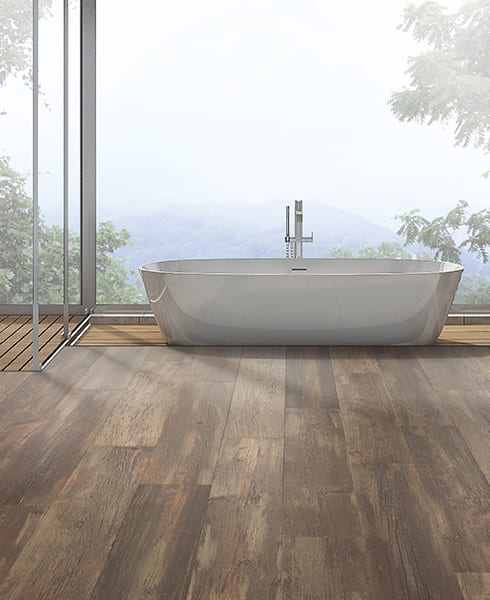
See Laminate in Person at Sunset Flooring
Laminate is easiest to choose in person, where you can feel the texture and see how the color shifts in real light. Stop by our St. George store to compare samples side by side, or order a few online to test against your own afternoon sun. You can also see what your neighbors say about working with us in our customer reviews. When you're ready, get your free estimate and let's find the laminate that fits your home.
Request an estimateFeatured Laminate
Laminate Flooring FAQ
Where can I buy laminate flooring near me in St. George?
Does Sunset Flooring install laminate flooring?
Is laminate flooring good for allergies?
What is hybrid laminate flooring?
Can laminate flooring go over radiant floor heating?
How long does laminate flooring last?
Does laminate swell?
How do I clean my laminate?
Is laminate a good option for pets?
Does laminate scratch easily?
Does water get into the grooves and cracks?
Is laminate waterproof?
What does the AC rating mean?
Why does the thickness of laminate matter?
Is LVP or laminate quieter and warmer underfoot?
Reimagine your space
Get inspired with our beautiful flooring galleries




Copyright © 2026 Sunset Flooring | Privacy | Accessibility