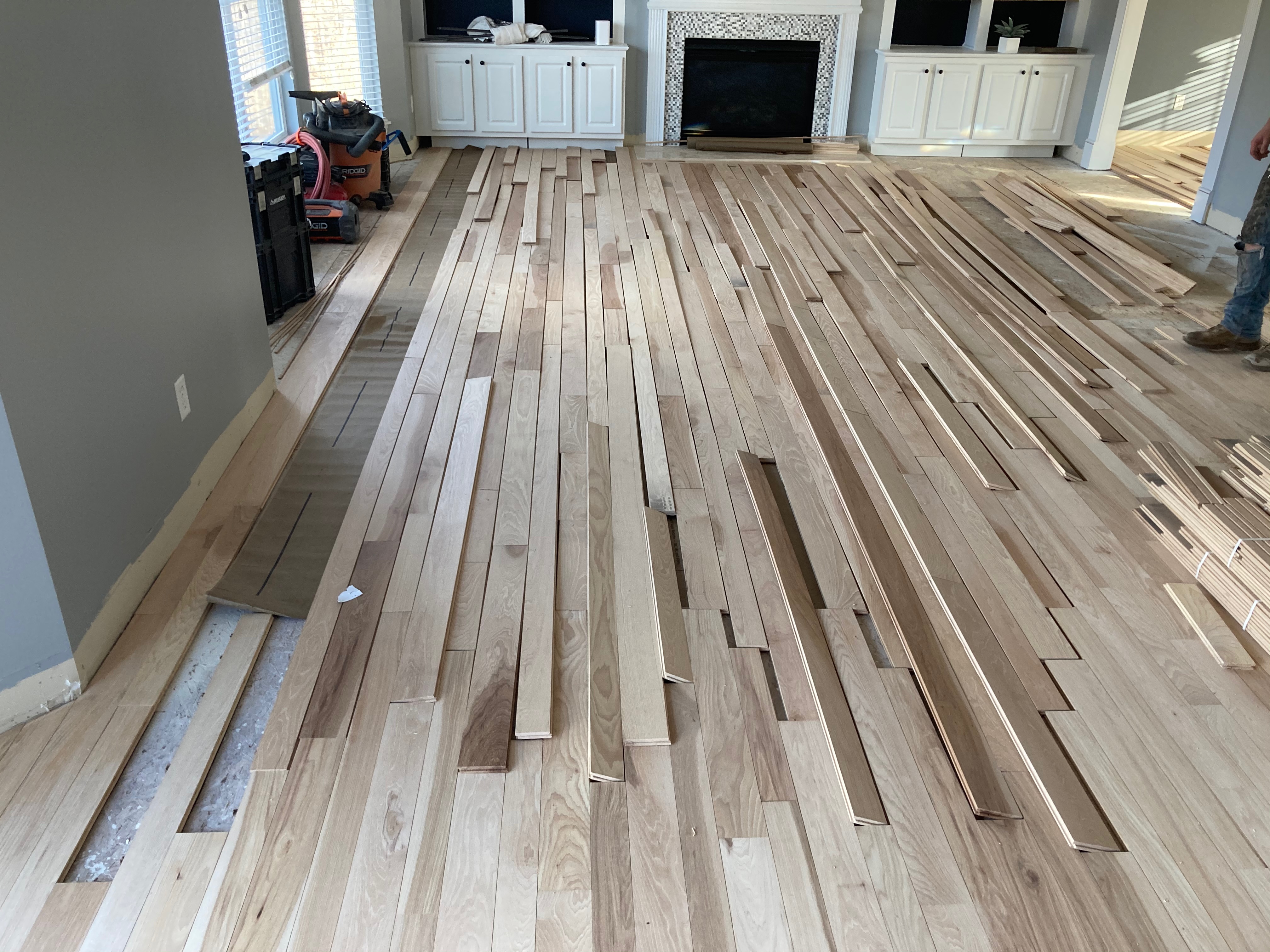
You finally get that beautiful hardwood installed, the AC is humming, and your living room in St. George looks like something out of a design magazine. Then the first cold, bone-dry winter hits. Suddenly there are hairline gaps between boards, a few edges feel sharp under bare feet, and one plank near the slider has started to cup. Most homeowners assume they bought “bad wood.” In reality, the problem usually starts with how hardwood was chosen and installed for our desert climate.
Below are the most common mistakes we see in dry-air homes—and how to avoid them.
Tag: hardwood-install-errors-dry-air
Mistake #1: Choosing the Wrong Type of Hardwood for Dry Air
Wood is hygroscopic—it constantly trades moisture with the air. In the Mojave Desert, relative humidity often drops well below the 30–50% range hardwood manufacturers expect. Solid wood planks can lose bound water, shrink across their width, and open up unsightly gaps.
Engineered constructions handle this much better because the cross‑layered core resists dramatic movement as the seasons change. That’s why for most upscale homes in places like Bloomington Hills or Ivins, we strongly steer clients toward engineered formats rather than wide solid planks.
If you’re just starting to plan your project, it helps to explore engineered hardwood collections designed for low humidity so you can visualize species, widths, and finishes that behave predictably in our climate.
Key idea: In very dry homes, the structure of the plank matters more than the species.
Mistake #2: Skipping Proper Acclimation and Moisture Checks
A lot of hardwood complaints trace back to one simple oversight: the flooring went in before it “met” the house. When wood arrives from a warehouse at a different temperature and humidity, it needs time to equalize with your interior conditions.
In desert homes, acclimation is not just stacking boxes in a garage for a day. It means:
- Storing the material in the actual rooms where it will be installed, with HVAC running as it normally would, for the period recommended by the manufacturer.
Installers also need to test both the subfloor and the planks with a moisture meter. If a concrete slab in a Washington subdivision is still off‑gassing moisture from recent construction, that vapor can move into the wood and cause cupping, even if the air above is dry.
Our crews follow strict protocols outlined in our professional flooring services overview to stabilize materials before the first board is nailed or glued, dramatically reducing movement-related callbacks.
Key idea: If the wood hasn’t acclimated to your house, it will try to do it after installation—on your dime.
Mistake #3: Underestimating UV and Heat from Desert Sun
Another silent hardwood killer in Southern Utah is sunlight. Large, unshaded windows can push surface temperatures well above the ambient room air and flood the floor with UV. Over time, you’ll see color shifts where rugs used to sit, dry‑brittle grain near sliders, and finish checking along the most exposed boards.
Homeowners often assume the finish alone will protect the floor. In reality, even the best urethane coatings can’t fully block years of direct ultraviolet radiation and thermal cycling.
To protect your investment, we almost always recommend pairing hardwood with custom window treatments that control UV and heat gain. Cellular shades, shutters, and layered fabrics dramatically cut the radiation that hits your planks, keeping both color and structure more stable over the long term.
Key idea: If the sun can “see” your floor, it can fade and dry it out unless you manage the light.
Mistake #4: Using the Wrong Underlayment and Expansion Details
In a dry climate, tiny installation details make a big difference in how hardwood behaves. Two problem areas show up repeatedly:
First, underlayment choice. On concrete slabs, you need a vapor retarder that slows moisture diffusion without trapping it in a way that encourages mold. On wood subfloors, the wrong cushion can let boards flex too much, breaking the adhesive bond or stressing fasteners.
Second, expansion space. Because the air is so dry, some DIYers install boards tight to walls, assuming they “won’t move much here.” Then a rare humid spell or seasonal change hits, the planks expand, and pressure causes tenting, squeaks, or edge crushing.
Our design team can walk you through how underlayment, layout, and trim details interact with your specific substrate, and you can also coordinate hardwood with cooler surfaces—like the options in our porcelain and ceramic tile catalog—to balance performance across different rooms.
Key idea: Hardwood needs room to breathe and the right support underfoot, even in a dry house.
Mistake #5: Treating Hardwood Like Tile When Cleaning
Once the floor is in, maintenance habits can either preserve its stability or accelerate wear. In desert homes, two cleaning mistakes show up often:
Using too much water. Wet mopping as if the floor were tile lets moisture seep into seams and bevels, causing localized swelling and edge ridging that never quite goes away.
Using harsh cleaners. High-alkaline or abrasive products, sometimes chosen to fight hard-water spots, can weaken finishes and make the wood more vulnerable to micro‑scratching from the ever‑present red desert dust.
During our in‑home visits, we walk clients through appropriate products and tools, and for rooms that will always see splashes or tracked‑in pool water, we may suggest pairing hardwood areas with waterproof luxury vinyl planks in adjacent spaces to reduce risk.
Key idea: Minimal moisture, pH‑neutral cleaners, and frequent dry dusting are your best friends.
If you’re considering hardwood for a new build or remodel, it pays to get the installation science right from day one. Our team combines decades of Mojave Desert experience with rigorous technical training to help you avoid costly mistakes and enjoy a floor that stays beautiful for years. When you’re ready, you can schedule a technical flooring consultation and in‑home estimate and we’ll tailor a solution to your home’s unique conditions.