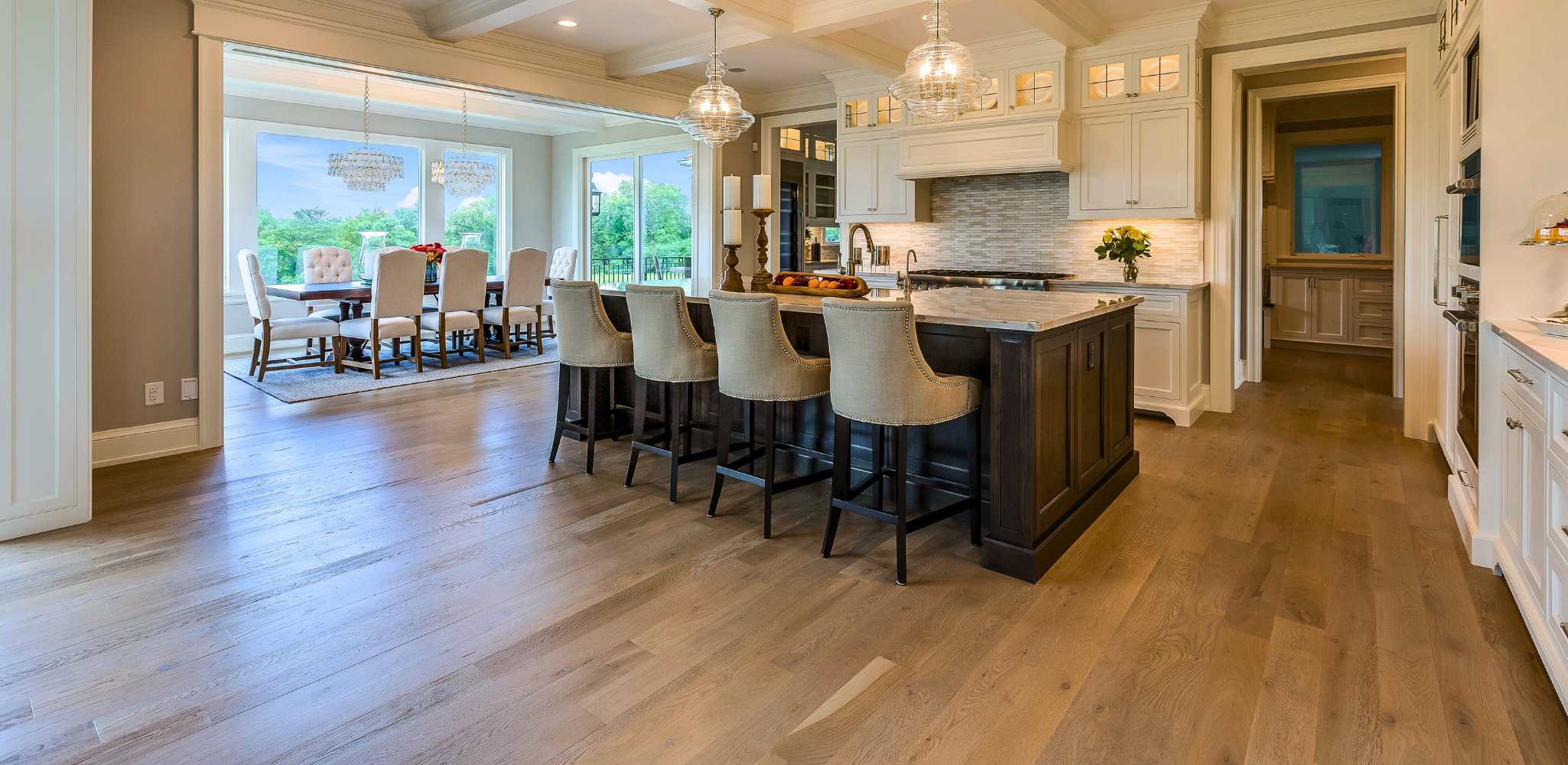
You fall in love with a wide-plank white oak floor on Instagram, then step outside your St. George front door into 105°F heat and bone‑dry air and wonder, “Will that actually survive here?” That’s the right question. In our Mojave Desert climate, hardwood isn’t just about color and grain—it’s about how the material behaves when humidity drops into the single digits and afternoon sun blasts through unshaded glass.
Below, we’ll break down how engineered and solid hardwood respond to Southern Utah conditions so you can choose confidently.
Tag: engineered-vs-solid-utah
How Engineered and Solid Hardwood Are Built
Solid hardwood is exactly what it sounds like: each plank is milled from a single piece of wood. Engineered hardwood uses a real hardwood wear layer bonded to cross‑laid plywood or high‑density core layers beneath. That layered construction is more than a manufacturing trick—it’s a way of controlling how the wood moves.
Wood is hygroscopic, which means it takes on and releases moisture. In dry air, it shrinks; in higher humidity, it swells. Solid planks expand and contract mostly across their width, so in a climate that swings from cool nights to scorching afternoons, you can see gapping, cupping, or even cracking if the system isn’t designed correctly. Engineered boards are built so the layers resist each other’s movement, dramatically reducing seasonal change.
If you want to see how many species and constructions are available, our online hardwood catalog lets you compare engineered and solid options side by side with filters for color, width, and wear layer thickness.
Dry Air, Heat, and Real‑World Stability
In Southern Utah, relative humidity often drops into the single digits and stays low for months. That’s where the difference between these two constructions really shows.
With solid hardwood:
- Planks tend to shrink more aggressively in extended dry seasons.
- Joints can open up, especially on wider boards.
- Repeated cycles of shrinking and swelling stress fasteners and finishes.
Engineered hardwood still moves, but lab data and field experience both show the movement is usually far less—often around half that of equivalent solid boards. For open‑concept homes with big spans of glass, we almost always steer clients toward engineered platforms because they tolerate these stresses better while still giving you a genuine wood surface.
In spaces where you expect regular moisture—entryways from a pool area or a bath renovation—you may even decide that a different category makes more sense and explore waterproof luxury vinyl planks that mimic hardwood for those zones while keeping engineered wood in the main living areas.
Sunlight, UV, and the Role of Window Coverings
Both solid and engineered hardwood can fade or amber under intense UV exposure. Pre‑finished products use durable UV‑cured coatings, but no finish is invincible when afternoon sun pours through a west‑facing slider for hours a day.
The solution is architectural, not just chemical. We strongly recommend pairing any new hardwood installation with physical light control. Thoughtful use of shutters, cellular shades, or layered treatments lets you enjoy natural light without sacrificing your investment.
If you’re planning a great room with tall glass, it’s worth looking at how custom window treatments manage UV and heat at the glass line so your floors aren’t taking the full brunt of the sun. In many Bloomington Hills and Ivins homes, that combination—engineered wood plus well‑designed coverings—is what keeps floors looking new for years instead of just a season.
Design, Texture, and Where Solid Still Shines
Choosing between engineered and solid isn’t only about physics; it’s also about how you plan to live in the space.
Engineered hardwood:
- Comes in wide planks that stay more stable in dry air.
- Offers a huge range of veneers, from rustic hickory to clean European oak.
- Can be floated, glued, or stapled depending on subfloor conditions.
Solid hardwood:
- Can be sanded and refinished more times over its life, if thickness allows.
- Appeals to purists who want a single‑species board through and through.
- Works best in carefully controlled interiors with more moderate environmental swings.
Texture matters here too. Fine red rock dust and silica sand are part of daily life; high‑gloss finishes will show every micro‑scratch. Many homeowners end up pairing smoother engineered planks in formal areas with softer surfaces like bedroom‑friendly carpets that absorb sound and add warmth where bare feet and quiet mornings matter more than a continuous wood look.
Because every home and subfloor is different, we spend time in design appointments dialing in species, thickness, and installation method. If you want help coordinating hardwood with tile in a bath, or tying it into stone‑look floors, our team can walk you through design consultations that consider both aesthetics and building science.
If you’re weighing engineered versus solid hardwood for a new build or remodel, we’re happy to look at your floor plans, exposure, and lifestyle and recommend a system that will actually perform in our desert climate. When you’re ready, you can request a free in‑home estimate and technical evaluation, and we’ll bring our expertise right to your living room.