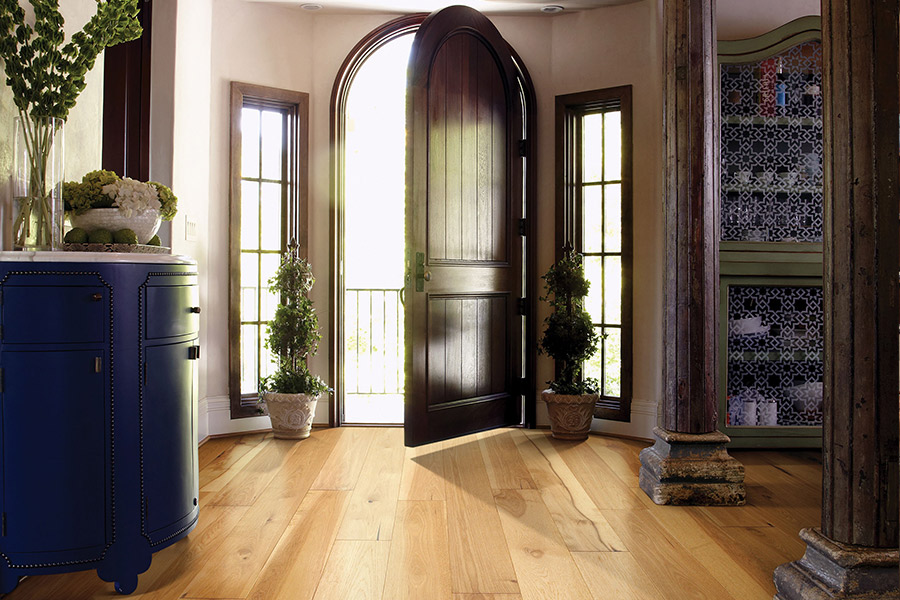
You choose new hardwood because you want warmth, character, and that unmistakable depth only real wood can bring to a home. Then the desert sun goes to work. In Southern Utah, intense daylight, triple-digit summer heat, and bone-dry air don’t just brighten a room—they slowly change the materials inside it. A beautiful floor installed in St. George can begin to fade unevenly if one area sits in direct sun day after day while the rest stays shaded. That is why floor selection should never be separated from light control.
Sunlight changes wood long before most homeowners notice
Hardwood responds to its environment in visible and invisible ways. Ultraviolet radiation triggers photochemical changes in the lignin and pigments near the surface, which is why rugs moved after a year often reveal lighter or darker outlines beneath. At the same time, low indoor humidity can encourage shrinkage between boards, especially if the material is not well matched to the climate. When you compare engineered wood collections built for dry interiors, you are really evaluating how well a floor can hold its appearance and structure under desert conditions.
This is also where design choices become practical, not just aesthetic. Wider planks, natural character variation, and lower-gloss finishes can make everyday dust less obvious, but none of those features stop UV exposure by themselves. Sun management is part of floor protection, especially in rooms with large west-facing glass.
Window coverings protect the investment you just made
The right treatment does more than soften a room visually. It reduces direct solar exposure, helps moderate heat gain, and limits the harsh light patterns that create uneven aging across the floor. That matters in Santa Clara homes with expansive views and in open-concept layouts where sunlight travels deep into the interior. Materials such as shutters, cellular shades, and lined drapery all perform differently, which is why many homeowners benefit from reviewing light-blocking options for large desert windows before finalizing a flooring plan.
Good light control also improves comfort. Rooms feel less glaring in the afternoon, finishes stay more consistent over time, and furniture fabrics age more evenly. In other words, window coverings are not an accessory added later—they are part of a coordinated system that protects the surfaces you live on every day.
Laminate can be a smart companion material in sunny spaces
Not every room needs the same solution. Bedrooms, offices, or lower-traffic areas may be ideal for hardwood, while intensely sunlit secondary spaces sometimes benefit from a different material strategy. In households balancing performance, style, and budget, many people explore realistic wood-look laminate styles for rooms that see abrasive dust, constant foot traffic, or frequent furniture movement.
Laminate still needs protection from prolonged direct sun, but its wear layer can be especially practical where fine red sand is regularly tracked in from outside. The key is coordination. When adjacent rooms receive different amounts of light, choosing surfaces and coverings together produces a more consistent look across the home.
Installation and planning matter as much as the product itself
Even an excellent material can disappoint if the room is not evaluated correctly. Board orientation, subfloor condition, moisture readings, expansion planning, and incoming daylight all affect long-term results. That is why homeowners often appreciate working through a full design consultation process before making final decisions, then relying on professional flooring installation services to carry the plan through with precision.
When your floors and window coverings are selected as one package, the result feels more intentional. You get a home that looks refined on day one and stays that way longer in the demanding climate of Southern Utah.
If you are planning new hardwood and want to protect it from UV exposure, heat, and dry air, the next step is simple: schedule a free in-home estimate.