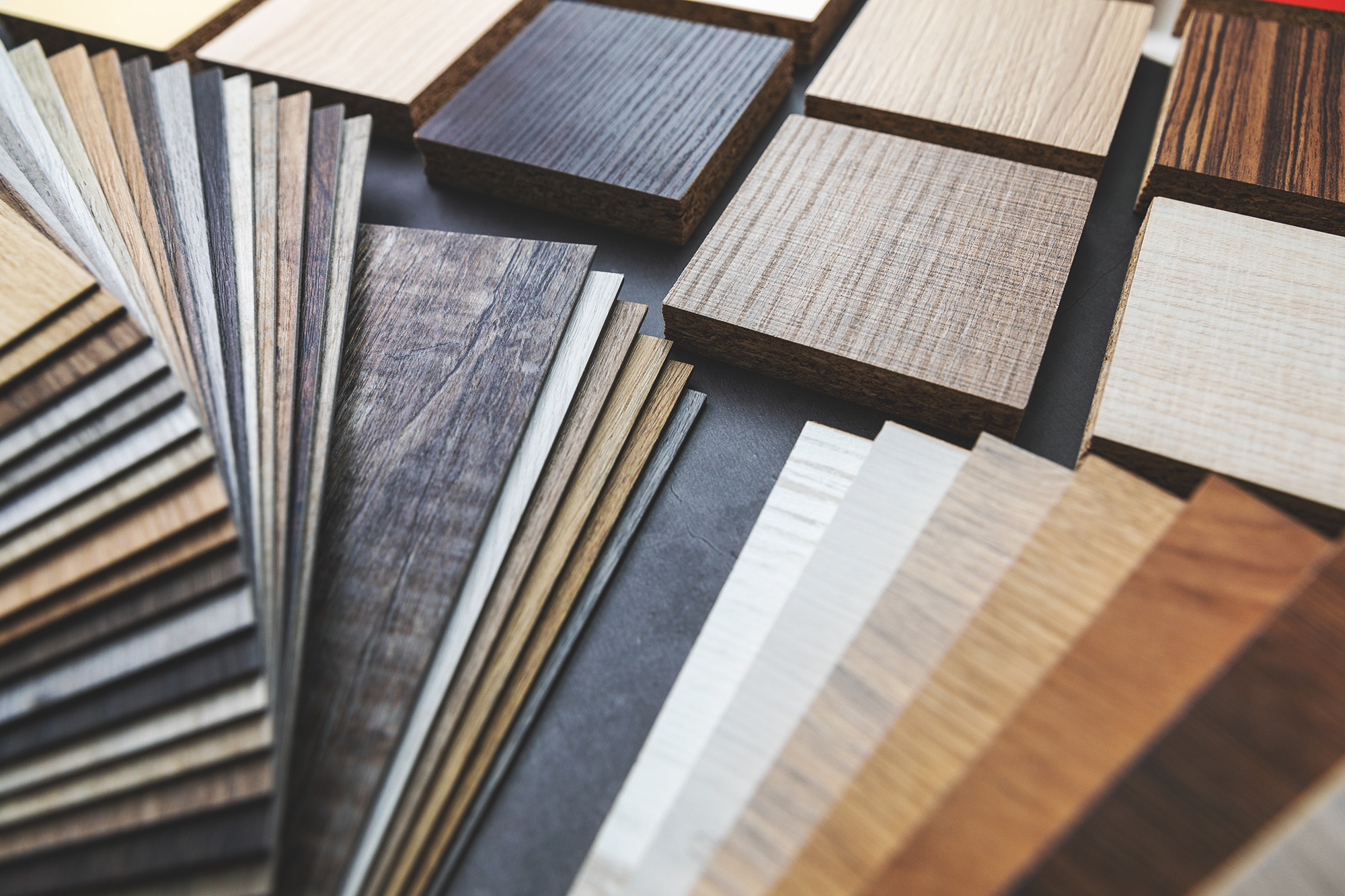
You've settled on hardwood for your Mesquite home — that part was easy. The warmth, the authenticity, the way it anchors a room. But now you're standing over sample boards, and the decision that stops you cold isn't color or species. It's width. Should those boards run five inches across, or stretch to seven or eight? The difference might seem subtle on the showroom rack, but once installed, plank width transforms the entire architectural personality of your space. And in this climate, it has structural implications most homeowners never consider until it's too late.
The Visual Language of Plank Width
Wide-plank flooring — typically anything six inches and broader — reads as architecturally confident. Fewer seams crossing your floor create an uninterrupted, expansive visual field. In open-concept great rooms with generous natural light, those broad boards anchor the space with a modern, almost furniture-like presence. Narrow planks, by contrast, introduce more rhythm. More seams mean more linear movement, which can make a compact room feel deliberately detailed rather than cramped.
Neither is objectively better. The question is what your home asks for. A sprawling golf-course property with vaulted ceilings benefits enormously from the grounding effect of wide planks. A cozy guest casita or hallway, meanwhile, feels more proportionally balanced with traditional strip widths. The trick is matching scale to sightlines — and that's before the science even enters the conversation.
What the Desert Climate Demands of Your Hardwood
Here's where the discussion shifts from taste to building physics. Mesquite sits at the edge of the Mojave, where humidity routinely plunges into the single digits. Wood is hygroscopic — it absorbs and releases moisture from the air. When that air stays bone-dry for months on end, solid hardwood shrinks. Boards pull apart at the seams. Gaps appear. The wider the plank, the more each individual board moves, which means wide solid hardwood can develop noticeable separations that narrow planks might partially disguise.
This is precisely why we steer our clients toward engineered hardwood collections built for dimensional stability. Cross-ply construction — layers of real wood bonded in alternating grain directions — resists the tug-of-war that destroys solid wood in low-humidity environments. You get the full visual drama of wide planks without sacrificing structural integrity when the dew point vanishes. Today's premium engineered boards are indistinguishable from solid wood once installed, and they handle the Mojave's atmospheric swings with composure that solid stock simply cannot match.
Desert Dust, Sunlight, and the Daily Grind
Fine red silica dust is a fact of life here. It sifts through doorways, settles into micro-crevices, and grinds against surface finishes underfoot. Narrow-plank floors have more seams, which means more edges where grit can accumulate. Wide planks reduce that seam count, simplifying daily maintenance — but they also make each individual scratch more visually prominent if the finish isn't up to the task. A matte or wire-brushed texture helps enormously, camouflaging the fine particulate wear that glossy surfaces broadcast instantly.
Then there's the sun. Unshaded south-facing windows pour ultraviolet radiation across your floors for hours every afternoon. That light doesn't just warm the surface — it photochemically degrades wood fibers and bleaches finishes unevenly over time. This is where strategic window coverings become mechanically necessary. Cellular blinds and custom shutters intercept UV rays before they reach the wood, preserving both color and structural integrity. We tell every hardwood client the same thing: the floor and the window treatment are not separate purchases. They are two halves of the same protection strategy.
Installation Expertise Matters More Than Width
A beautifully milled plank, regardless of width, is only as good as the substrate beneath it. Subfloor flatness tolerances grow tighter as planks widen — a seven-inch board telegraphs every imperfection in the concrete slab far more than a three-inch strip does. Moisture testing, proper acclimation periods, and precision leveling become non-negotiable.
When you work with a team that has installed floors across the region since 1991, those variables aren't guesses — they're protocol. Our crews understand exactly how local slab-on-grade construction interacts with hardwood dimensions and how seasonal humidity shifts affect long-term performance. You walk away with a floor that stays flat, quiet, and gap-free year after year.
Choosing What's Right for Your Space
The best plank width for your home depends on sightlines, room proportions, and how you live. Wide planks reward open layouts and modern sensibilities; narrow planks bring traditional detail and proportional harmony to smaller rooms. Either way, material science has to come first — engineered construction, proper acclimation, and UV protection.
If you are weighing these decisions and want guidance that accounts for both design and the atmospheric realities of Southern Utah, we can walk through your options in a personalized consultation. We'll assess your light exposure, floor plan, and lifestyle to help you land on a width — and a construction — you'll love living with for decades.
Ready to see the difference for yourself? Schedule your free in-home estimate today, and let's find the hardwood that belongs under your feet.