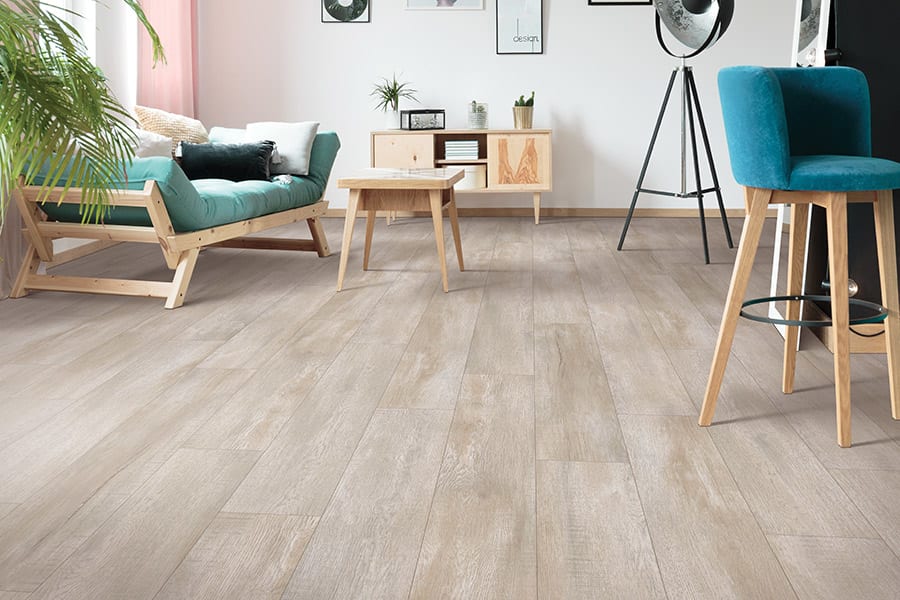
Laminate and luxury vinyl both belong in a St. George home, and the choice between them turns on heat and dryness far more than on water. July high temperatures here average about 102 degrees, and the air stays dry nearly the whole year, so a floor near a big west-facing window lives with strong afternoon sun and a wide swing between a cool morning and a scorching afternoon. That's a very different test from the wet-basement scenario most laminate-versus-vinyl guides are written around. Luxury vinyl wins on standing water. Laminate holds a slight edge on hard, hot surfaces and underfoot feel. From there, it comes down to which rooms you're flooring and how much sun they take.
What Is the Real Difference Between Laminate and Luxury Vinyl?
The core is the real difference between the two floors, and the core is what decides how each one behaves in the desert. Laminate is built on a high-density fiberboard core, which is finely ground wood pressed into a dense board, topped with a printed photo layer and a clear wear layer that takes the abuse. Luxury vinyl plank, usually shortened to LVP, is built on a rigid mineral-and-plastic core with a printed film and a wear layer on top. Both imitate wood convincingly. What they're made of underneath is what separates them once the temperature climbs and the humidity drops.
That fiberboard core is why water is laminate's weak point and why heat is not. Wood fiber swells if water sits on a seam long enough to work its way in, so a flooded laminate plank can lift at the edges and stay that way. The same wood-based core is stable when a room gets hot, which matters in a sun-filled Utah living room. Luxury vinyl flips both traits: the plastic-based core shrugs off water completely, and that same plastic is the part that reacts to heat.
Which Floor Handles St. George Heat and Sun Better?
Laminate is the more stable of the two under heat, while luxury vinyl needs a more controlled room to stay flat. Rigid-core luxury vinyl expands and contracts as the temperature changes, which is why COREtec, one of the luxury vinyl lines we carry, tells installers to put its planks down in a climate-controlled space and to leave room around the edges for the floor to move. In a house that holds a steady indoor temperature, that movement is invisible and nothing goes wrong. In a sunroom, an entry with a wall of glass, or a home left unconditioned through a 102-degree week, a dark vinyl floor in direct sun can warm enough to push against its edges, and a floor with no room to expand can lift or gap.
Laminate takes heat in stride but reacts to the other half of the desert climate, which is how dry the air is. Wood-based cores do best between 30 and 50 percent indoor humidity, the range the National Wood Flooring Association publishes for wood floors. Southern Utah air sits well below that for much of the year, in a climate so dry that June, the driest month, averages only about two tenths of an inch of rain. Because laminate's core is essentially compressed wood, it loses moisture in a very dry room the way a plank floor does, so a laminate floor can open fine gaps at the seams during the driest stretches and close them back up when the air holds more moisture. Neither floor fails from Southern Utah heat on its own. The failures come from the extremes: standing sun on unprotected vinyl, or air so dry that a laminate floor is left to shrink season after season with no humidity control at all.
Window coverings change this math for either floor, which is worth planning at the same time as the flooring. Blinds or shades on the windows that take the hardest afternoon sun keep the surface temperature down on vinyl and slow the fading that strong sun causes on any printed floor. If you're choosing floors and window treatments together, a short sit-down at a design consultation is the easiest way to line the two up.
How Each One Handles Water and Spills
Luxury vinyl is the floor to pick where water is a real risk, because its core cannot absorb it. A spill left overnight, a dog's water bowl that sloshes, a slow leak under a dishwasher: none of it swells an LVP plank. That's why luxury vinyl ends up in kitchens, bathrooms, laundry rooms, and mudrooms more often than laminate does, and why you can see the full range in our luxury vinyl selection.
Laminate handles everyday life fine as long as water does not sit on it. Pergo, one of the laminate brands we carry, tells owners to clean with a well-wrung mop, never soak the floor, and wipe up spills within 24 hours, because it's standing water at the seams that ruins laminate rather than ordinary foot traffic. Newer waterproof laminate closes much of the gap by sealing the core and the joints, which makes it a real option in a busy kitchen; you can filter to those lines in our waterproof laminate. For a family that wants the warmth of a wood-look floor in a dry living room or bedrooms, standard laminate is still the value pick, and the whole range sits in our laminate collection.
How Tough Is Each Floor Underfoot?
Both floors resist scratches well, and laminate's toughness is easy to read because it carries a number. Laminate wear is graded on the Abrasion Class scale, the AC rating you see on the sample, which the North American Laminate Flooring Association and the wider industry use to rank how well the clear top layer stands up to grit and traffic. The scale runs from AC1 for light-traffic rooms up through AC2 for bedrooms, AC3 for heavy residential use, AC4 for light commercial floors, and AC5 for the busiest commercial spaces, and each step holds up to roughly 60 percent more wear than the one below it. For a St. George family with kids, pets, and sand tracked in off the trails, AC4 is the safe choice and AC3 is the practical minimum. If the ratings are new to you, we walk through them in detail in our guide to how AC ratings and wear layers work.
Luxury vinyl measures its toughness by wear-layer thickness instead of an AC number, given in mils, and a thicker wear layer means more scratch and dent protection. The practical difference most people feel comes down to firmness rather than scratch resistance. Luxury vinyl is a little softer underfoot and quieter, and its softer surface can dent under a heavy point load like a refrigerator leg or a dropped cast-iron pan. Laminate is harder and cooler to the touch, which many people prefer in a hot climate, and its harder surface resists denting but transmits a bit more sound.
Laminate vs Luxury Vinyl at a Glance
| What matters | Laminate | Luxury vinyl (LVP) |
|---|---|---|
| Core | High-density wood fiberboard | Rigid mineral and plastic |
| Standing water | Swells at seams unless waterproof-rated | Waterproof core, unaffected |
| Direct sun and heat swings | Stable; very dry air can open seams | Expands and contracts; needs a climate-controlled room |
| Scratch and grit | Very hard surface; rated AC3 to AC5 | Resists scratches; wear layer measured in mils |
| Dents from heavy points | Resists dents | Softer, can dent under heavy loads |
| Underfoot | Firm, cooler, a touch louder | Softer, warmer, quieter |
| Best rooms | Dry living areas and bedrooms; waterproof lines for kitchens | Kitchens, baths, laundry, mudrooms, whole-home |
So Which Should You Choose for a Hot, Dry Home?
Choose luxury vinyl if water or whole-home consistency is your priority. It's the floor that lets you run the same look through a kitchen, a hallway, and a bathroom without worrying about a spill, and it's the more forgiving pick in a home where the temperature is kept steady. The one place to plan around it is a room with a wall of glass and no shade, where afternoon sun in July can heat the surface; there, plan for window coverings and make sure the installer leaves the floor room to move.
Choose laminate if your priority is a hard, cool, wood-look surface in dry rooms, or the best value for the square footage. It suits bedrooms, offices, and living areas that don't see standing water, and a waterproof-rated laminate stretches that range into the kitchen. In a very dry home, the one thing that keeps a laminate floor looking its best is keeping the indoor air from getting extreme, the same simple humidity control that protects real wood. For most St. George homes the honest answer is a mix: luxury vinyl where water lives, laminate where it doesn't.
Questions We Get About Laminate and Luxury Vinyl
Does luxury vinyl fade in the desert sun?
Luxury vinyl can fade under intense, direct sun over time, and so can laminate, because both carry a printed design layer that strong ultraviolet light slowly breaks down. Better lines resist it well, and the practical fix is the same one that keeps a room cooler: shades or blinds on the windows that take the hardest afternoon sun. In a St. George home with big windows, planning window coverings alongside the floor protects your investment on either material.
Can I put laminate or luxury vinyl over radiant heat?
Both can go over radiant heat, but only within the temperature limits the manufacturer sets, and that's a detail to confirm before you buy. Radiant systems push the floor's surface temperature up, and a floor run too hot can move or separate. Tell us the room has radiant heat and we'll point you to the lines rated for it.
Which is better for a St. George kitchen?
Luxury vinyl is usually the better kitchen floor here because its waterproof core handles the sink, the dishwasher, and the spills that come with a busy kitchen. A waterproof-rated laminate is a strong second choice if you prefer laminate's harder, cooler surface. Either way, aim for a tough wear layer, since a kitchen is the hardest-working floor in the house.
Is laminate or luxury vinyl cheaper?
Standard laminate is usually the lower-cost option for a given look, which is part of why it stays popular for bedrooms and living areas. Luxury vinyl and waterproof laminate sit higher, and within each material the price climbs with a thicker wear layer and a more realistic surface. The better way to compare is installed cost for the specific rooms you're doing, since subfloor prep and the amount of material both move the number.
Choosing the Right Floor for Your Rooms
The best way to settle laminate versus luxury vinyl is to match each room to how it's actually used, and that's a conversation worth having with samples in hand and your rooms' sun exposure on the table. Bring us your floor plan and tell us which rooms get the hardest afternoon light, and we'll help you weigh the two against your budget, then measure and quote the job. When you're ready, request a free estimate and we'll walk your rooms with you and put together a plan that fits how your family lives.