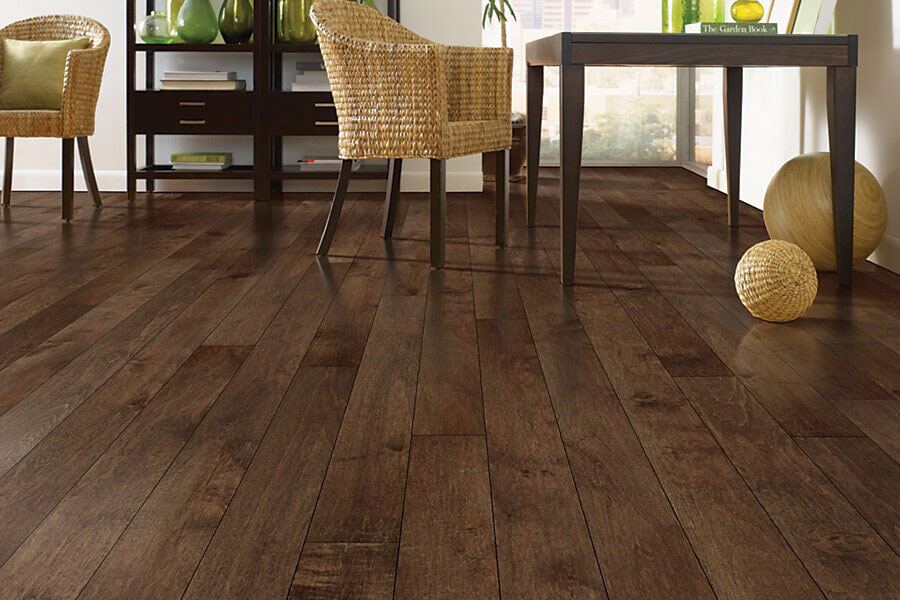
The Mojave sun does two things to a hardwood floor at once, and most advice only handles one of them. It fades the wood, and it dries and moves the boards. You can't stop either completely in a climate this bright, but you can slow the fading a lot and keep the floor flat, and the fixes split between the glass and the floor itself. Quality window film blocks up to 99 percent of the sun's ultraviolet light, the main driver of fading, which makes the windows the first place to spend effort. The floor itself is the second. Handle both, and a wood floor holds its color and its shape for years in a St. George home.
Why Does Desert Sun Fade Hardwood Floors?
Desert sun fades a hardwood floor because sunlight slowly breaks down both the wood's natural color and the finish on top of it. Ultraviolet light does most of the damage, but visible light plays a part too, which is why a floor can shift color even behind glass that feels like it blocks the worst of the sun. The change is a chemical one in the wood itself, so it is not something a cleaner can undo. In St. George, where July highs average about 102 degrees and the sky is clear most of the year, floors simply take more light than they would in a cloudier climate, and they show it sooner.
Some color change is normal and even expected on a wood floor, so the goal is to slow and even it out rather than to prevent it. A floor that fades evenly still looks like a wood floor. The problem cases are the sharp ones: a bright rectangle where the afternoon sun lands every day, or a pale stripe left when a rug is finally moved after two years. Those come from uneven exposure, and they are the ones worth planning around from the start.
Which Wood Species Fade or Darken Fastest in the Sun?
Species matters more than almost any other choice in how fast a floor shifts color, so it's worth knowing before you buy. Research on how wood reacts to light singles out a few American hardwoods as especially sensitive. Cherry is the most reactive of the common species and shifts under almost any light, moving from a pinkish tone toward a deeper reddish brown. Walnut goes the other way and can bleach out in a direct stream of UV, losing some of its dark depth. Poplar, sometimes sold as tulipwood, also changes noticeably. Tropical woods such as Brazilian cherry are known for darkening quickly and dramatically in strong sun.
Domestic oak and hickory hold their color far better, which is part of why they are such common choices for bright rooms. If you love the look of a light-reactive species, you can still use it, but plan for more sun control and expect the color to settle into a new tone over the first year or two. If low-maintenance color is the priority for a sun-filled great room, a stable species is the easier path. You can compare the species we carry in our hardwood collection, and our guide to the different hardwood species and how they wear goes deeper on the trade-offs.
| Species | How it reacts to strong light |
|---|---|
| American cherry | Reacts to almost any light; deepens toward a rich reddish brown |
| Black walnut | Can lighten and lose depth under direct UV |
| Poplar (tulipwood) | Shifts color noticeably over time |
| Brazilian cherry and other tropicals | Darken quickly and strongly in bright sun |
| Red oak and hickory | Hold their color comparatively well |
The Other Problem: Sun-Driven Heat and Dry Air Move the Boards
Fading is only half of what the desert sun does, because the same sun and heat pull moisture out of the air and out of the wood. A hardwood floor is built to sit between 30 and 50 percent indoor humidity, the range the National Wood Flooring Association publishes, and Southern Utah air runs well below that for much of the year; even the driest month here averages only about 0.2 inches of rain. When the air gets that dry, boards give up moisture and shrink, which opens thin gaps at the seams, and a room that bakes in afternoon sun dries fastest of all. Wide swings between a humid swamp-cooler season and a bone-dry stretch are what make the movement show.
Keeping indoor humidity steady is the fix, and it protects the floor's shape the same way sun control protects its color. A whole-home humidifier tied to the furnace, or a portable one in the driest rooms, holds the air closer to what the wood wants and keeps seasonal gaps small. This is the quiet half of sun protection: the shades that keep a room cooler also keep it from drying out as fast, so one move helps on both fronts.
How to Protect a Hardwood Floor From the Sun
Protecting a wood floor from desert sun comes down to controlling the light at the window and managing the floor itself, and a few steps cover most of it. None of them is expensive next to the floor, and together they make the difference between a floor that ages gracefully and one that shows a sunburn.
- Window coverings on the hardest-hit glass. Blinds, shades, and shutters cut the direct beam during the worst afternoon hours, which slows fading and keeps the room cooler and less dry. These are what we sell alongside flooring, so you can plan the floor and the window coverings together.
- UV-blocking window film. Film applied to the glass blocks up to 99 percent of ultraviolet light while letting daylight through, which is the single most effective way to slow fading without darkening the room. Many homeowners add it to west- and south-facing windows.
- Move rugs and furniture around. Shifting an area rug and rearranging furniture a couple of times a year lets the floor age at one even rate instead of leaving sharp lines where a piece sat.
- Choose a finish and species with the sun in mind. A factory finish with UV inhibitors resists ambering better than a bare oil, and a color-stable species fades less to begin with.
- Hold the humidity steady. Keeping indoor air in the 30 to 50 percent range protects the boards from the drying that comes with all that sun and heat.
Do Window Coverings and Film Really Help?
Window coverings and film help a great deal, though neither stops fading completely, and knowing the limit keeps expectations honest. Ultraviolet light is the biggest single cause of fading, and quality window film blocks up to 99 percent of it, so the floor behind treated glass ages far more slowly than a floor in an untreated bay window. What film and shades cannot do is freeze the color in place, because some visible light still reaches the floor and wood keeps reacting to it. The realistic goal is a floor that changes slowly and evenly over years rather than one that develops a bleached path by its second summer. Pairing film or shades with the occasional rug shuffle gets you there. We go further into why the window side of this matters in our piece on why new floors need the right window coverings.
| Protection step | What it does | How much it helps |
|---|---|---|
| UV window film | Blocks up to 99% of UV at the glass | Biggest single reduction in fading |
| Blinds, shades, shutters | Cut the direct beam and lower room heat | Strong, and slows drying too |
| Rotating rugs and furniture | Evens out exposure | Prevents sharp fade lines |
| UV-inhibiting finish | Slows finish ambering | Moderate, chosen at purchase |
| Humidity control | Keeps boards from shrinking | Protects shape, not color |
Questions We Get About Sun and Hardwood Floors
Will my whole floor fade evenly?
A floor fades evenly only where the light reaches it evenly, which is why covered spots stay darker. The area under a rug or a sofa keeps its original color while the exposed wood around it shifts, so when the piece finally moves, the difference shows. Rotating rugs and furniture a few times a year is the simplest way to keep the whole floor aging at one rate.
Can a faded hardwood floor be brought back?
A solid hardwood floor, and an engineered floor with a thick enough top layer, can usually be sanded and refinished to reset the color, since fading lives in the surface. That's a bigger job than sun control, so it's worth protecting the floor first. If your floor has already faded unevenly, bring us photos and the species, and we'll talk through whether refinishing or better sun control is the right next step.
Does a UV-resistant finish stop fading?
A UV-resistant finish slows fading but does not stop it, because it protects the finish layer more than the wood's own color underneath. It's a worthwhile head start, especially paired with film or shades on the brightest windows. Think of the finish, the glass treatment, and the species as three settings on the same dial rather than a single fix.
Should I keep the blinds closed all day?
You don't need to live in the dark to protect a floor, which is the whole point of film and adjustable coverings. Closing shades during the few hours of hardest direct sun does most of the work, and UV film keeps protecting the floor even with the blinds open. The aim is to cut the intense direct beam, not to block daylight entirely.
Planning a Wood Floor That Lasts in the Sun
The best time to plan sun protection for a hardwood floor is before it goes in, when the species, the finish, and the window coverings can all be chosen together. If you already have a floor and want to slow the fading, the window side is where to start. Tell us which rooms get the hardest afternoon light and what species you have or want, and we'll help you line up the flooring and the window coverings so they work together. When you're ready, request a free estimate and we'll walk the rooms with you and put together a plan for both the floor and the glass.